01
Research
Power electronics, high-frequency conversion, GaN devices, isolated DC–DC converters, high-gain conversion, and spaceborne power systems.
About Me
I am a PhD Research Scholar in Electrical Engineering at IIT Roorkee, working in the field of power electronics. My research interests center on high-frequency power conversion, wide-bandgap semiconductors, isolated DC–DC converters, and reliable power conversion systems for demanding applications.
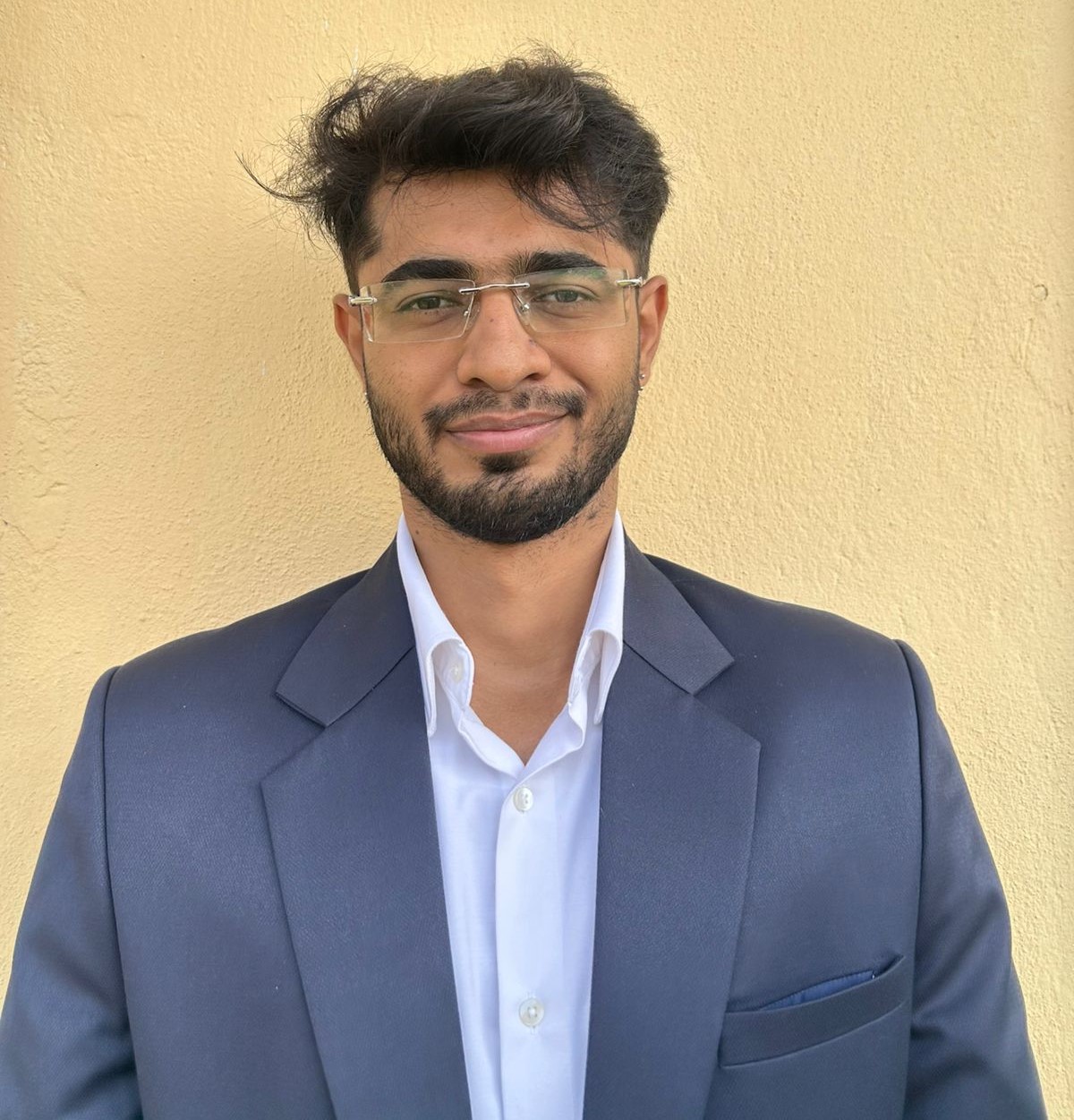
Profile
I am an Electrical Engineer with an academic background in Power Electronics and Drives. I completed my undergraduate education in Electrical Engineering at Maulana Azad National Institute of Technology (NIT Bhopal) and my M.Tech. in Power Electronics and Drives from Visvesvaraya National Institute of Technology (VNIT Nagpur).
I am currently pursuing my PhD in Electrical Engineering at Indian Institute of Technology Roorkee (IIT Roorkee). My present research direction is focused on the design, analysis, simulation, and experimental development of advanced power electronic converters, particularly high-frequency converters based on GaN power semiconductor technology.
I am particularly interested in the point where semiconductor devices, magnetics, topology, control, thermal behaviour, EMI, gate-drive design, and system-level requirements come together. For me, power electronics is not simply about designing a converter that works; it is about understanding why a system works, where its limits come from, and how those limits can be pushed without sacrificing reliability.
At a Glance
Power electronics, high-frequency conversion, GaN devices, isolated DC–DC converters, high-gain conversion, and spaceborne power systems.
Converter modelling, simulation, control, switching-loss analysis, magnetics, gate drivers, DSP-based implementation, and experimental validation.
FIDE-rated chess player and coach. Chess continues to shape my approach to calculation, planning, evaluation, and decision-making under uncertainty.
Research
Investigation of gallium-nitride-based power converters operating at high switching frequencies, with emphasis on efficiency, power density, switching behaviour, parasitics, and practical implementation.
Analysis and design of isolated converter architectures, including resonant and high-frequency topologies, with attention to voltage gain, soft switching, device stresses, transformer utilisation, and loss distribution.
Research toward compact and efficient power conversion systems for spaceborne electronic power conditioning, including high-frequency conversion from a low-voltage satellite bus toward higher-voltage DC links.
Interest in high-speed gate-drive design, dead-time optimisation, switching transients, control strategies, protection, electromagnetic compatibility, thermal behaviour, and reliability of high-frequency converters.
My M.Tech research investigated deep-learning-based estimation of State of Charge and State of Health in lithium-ion batteries, together with bio-inspired optimisation techniques for improved battery-management applications.
I work with MATLAB and Simulink, Python-based numerical tools, power-electronics simulation environments, and digital-control platforms for modelling, analysis, optimisation, and implementation.
Current Focus
One of my current research directions involves a two-stage power conversion architecture for a spaceborne electronic power conditioning system. The broader concept involves conversion of a approximately 70-V satellite DC bus through a pre-regulation stage to a higher-voltage DC link, followed by high-frequency GaN-based isolated power conversion.
The research problem brings together topology selection, semiconductor device selection, high-frequency transformer design, switching-loss analysis, gate-driver design, soft switching, thermal considerations, control, EMI, and system-level efficiency.
Education
Research focus: power electronics, high-frequency GaN-based converters, isolated DC–DC conversion, and advanced power conversion systems.
Graduate study in power electronics, drives, converters, control, and intelligent energy systems.
Undergraduate foundation in electrical engineering, electrical machines, power systems, control, electronics, and power conversion.
Previous Research
My M.Tech thesis explored intelligent methods for estimating State of Charge (SoC) and State of Health (SoH) in lithium-ion batteries. The work investigated deep-learning architectures including LSTM, GRU, and CNN-LSTM models and examined the use of bio-inspired optimisation techniques for improving model performance.
This work introduced me to the intersection of power electronics, battery management systems, machine learning, optimisation, time-series modelling, and data-driven engineering.
Technical Interests
DC–DC converters, resonant converters, isolated converters, high-gain architectures, soft switching, and loss analysis.
GaN and SiC devices, switching behaviour, parasitics, gate driving, thermal effects, and high-frequency operation.
Digital control, PWM, DSP-based implementation, MATLAB, Simulink, and embedded power-electronics systems.
Battery energy storage, BMS, renewable integration, intelligent estimation, and energy conversion.
Python, numerical computing, data analysis, optimisation, and engineering-oriented software development.
Deep learning, time-series prediction, optimisation, and data-driven approaches to engineering problems.
Explaining difficult technical concepts through structured reasoning, examples, visualisation, and problem solving.
Understanding how individual components interact to create reliable and useful engineering systems.
Beyond Engineering
Outside engineering, chess has been one of the most important long-term influences on how I think. I am a FIDE-rated chess player and have also worked as a chess coach.
Chess has taught me to separate calculation from evaluation, short-term tactics from long-term strategy, and confidence from certainty. More importantly, it has made me comfortable with situations where information is incomplete and decisions still have to be made.
These ideas naturally carry into research. A research problem rarely provides a complete position from the beginning. You have to identify what matters, determine what can be measured, test assumptions, recognise weaknesses, and gradually improve the position.
"The important thing is not to stop questioning." — A principle that extends well beyond chess and engineering.
Languages & Learning
I enjoy learning languages as a way of understanding how people structure ideas differently. English and Hindi are part of my everyday communication, while I have also explored several Indian languages and continue to learn Dutch.
Language learning has reinforced something I also see in engineering: the same idea can often be represented in very different structures, and understanding those structures can reveal something that translation alone does not.
Research Philosophy
I am interested in engineering problems where the answer is not obvious and where improving one part of a system creates new constraints somewhere else.
In power electronics, higher switching frequency can reduce the size of passive components but increase switching losses, electromagnetic interference, and sensitivity to parasitics. Higher power density can introduce thermal and reliability challenges. Better control can expose limitations in hardware.
These trade-offs are what make the field interesting to me. I want my research to move beyond simulations and isolated component-level improvements toward systems that are physically meaningful, experimentally validated, and useful in demanding applications.
Looking Ahead
My long-term goal is to develop into a researcher and educator who can work across the boundaries of power electronics, computation, control, and emerging energy technologies.
I am particularly interested in technologies that allow electrical systems to become smaller, faster, more efficient, and more reliable without hiding the physical complexity that makes those improvements possible.
This website is a record of that journey — my research, engineering work, experiments, writing, chess, and the questions I am still trying to answer.