01
GaN Power Electronics
High-speed switching, device losses, parasitics, gate driving, switching transients, and the practical limits of GaN-based conversion.
PhD Research Scholar · Electrical Engineering · IIT Roorkee
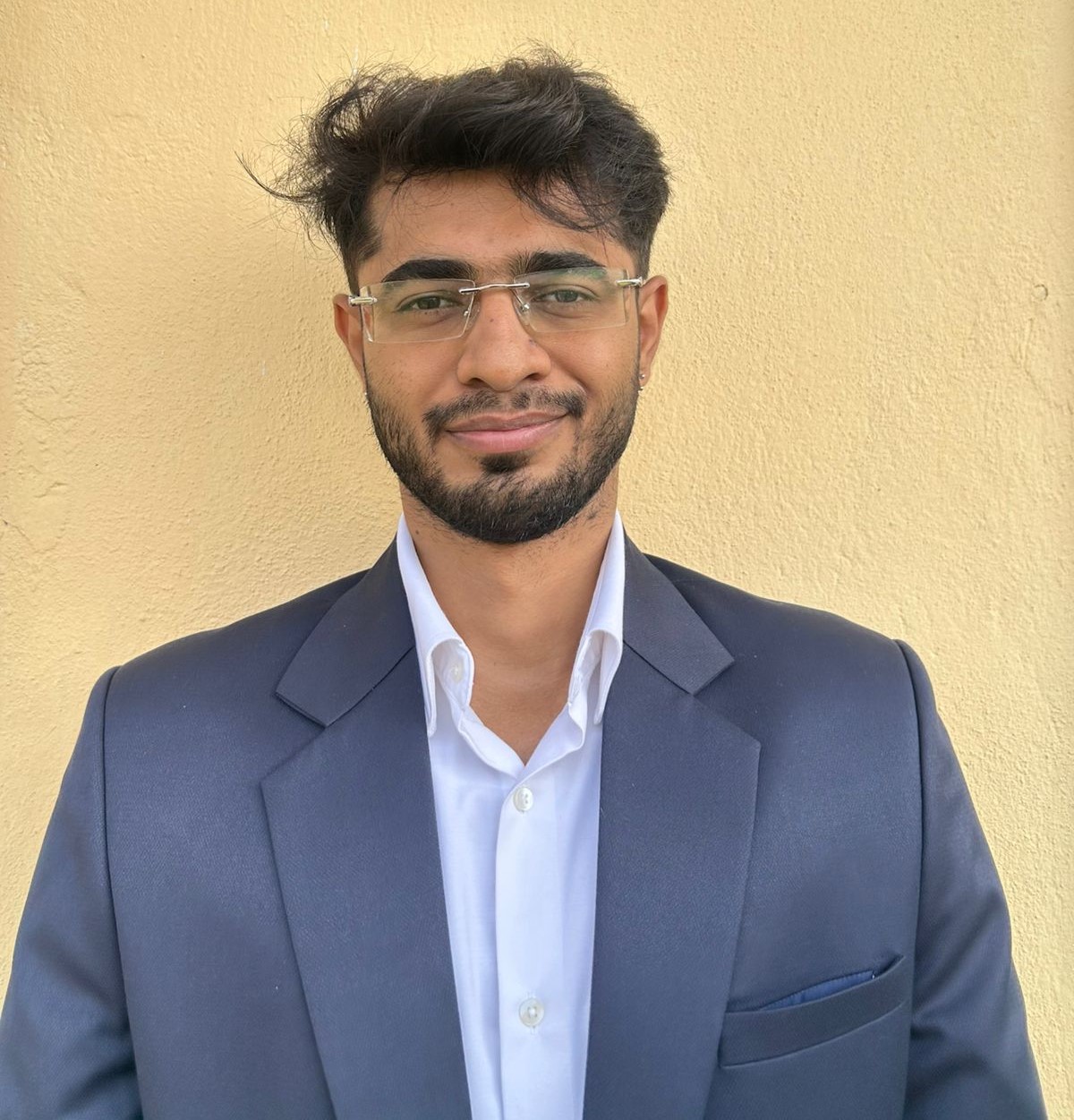
I am Sourabh Joshi, a PhD Research Scholar in Electrical Engineering at IIT Roorkee. My research focuses on high-frequency power conversion, GaN-based converters, isolated DC–DC converters, and advanced power-conditioning systems for demanding applications.
Current Research
My current research explores how wide-bandgap semiconductor devices, high-frequency switching, advanced converter topologies, and high-frequency magnetics can be combined to create compact, efficient, and reliable power-conversion systems.
One of my current research directions investigates high-frequency GaN-based isolated DC–DC converters for spaceborne electronic power conditioning. The broader system concept involves conversion from an approximately 70-V satellite DC bus through a pre-regulation stage to a higher-voltage DC link, followed by high-frequency isolated power conversion.
The work involves topology selection, switching-loss analysis, high-frequency transformer design, GaN device behaviour, gate-driver design, soft switching, parasitic effects, thermal management, control, electromagnetic compatibility, and reliability.
View detailed research profile →Research Themes
My research sits at the intersection of semiconductor devices, converter topology, magnetics, control, thermal behaviour, and system-level design.
High-speed switching, device losses, parasitics, gate driving, switching transients, and the practical limits of GaN-based conversion.
High-frequency isolated architectures, resonant converters, bridge-based topologies, voltage gain, efficiency, and device stress.
Transformer and inductor design, magnetic losses, leakage inductance, winding effects, and parasitic capacitance at elevated frequencies.
Gate resistance, dead-time, dv/dt, di/dt, protection, switching transitions, and reliable high-speed device operation.
ZVS, ZCS, switching-loss reduction, efficiency optimisation, and maintaining soft-switching conditions across practical operating ranges.
Compact and reliable power conditioning for spacecraft electronics, where efficiency, mass, thermal constraints, and reliability matter.
Academic Journey
My academic path has progressively moved toward specialised power-electronics research.
Research in power electronics with emphasis on high-frequency GaN-based converters, isolated DC–DC conversion, and advanced power-conditioning systems.
Graduate study in power electronics, drives, intelligent energy systems, converters, and battery-related applications.
Foundation in electrical engineering, power systems, electrical machines, control, electronics, and energy conversion.
Previous Research
Before moving deeper into high-frequency power conversion, my M.Tech research focused on intelligent estimation of lithium-ion battery states.
The work investigated deep-learning architectures including LSTM, GRU, and CNN-LSTM for State-of-Charge and State-of-Health estimation, together with bio-inspired optimisation techniques. This research provided a foundation in battery modelling, machine learning, optimisation, BMS, and data-driven engineering.
Engineering Approach
I am particularly interested in the gap between an ideal mathematical model and the behaviour of a real power converter.
Start with topology, equations, operating modes, device models, and analytical understanding.
Investigate switching behaviour, stresses, losses, control response, efficiency, and operating limits.
Account for parasitics, magnetics, gate drivers, thermal behaviour, measurement limitations, and experimental results.
Beyond Engineering
I am a FIDE-rated chess player and coach. Chess has taught me to evaluate positions, distinguish short-term tactics from long-term strategy, work with incomplete information, and remain patient when the correct answer is not immediately visible.
Explore my chess work →"Research and chess have something important in common: the strongest move is often the one that becomes visible only after you understand the position."
This website documents my journey through power electronics, research, engineering, chess, and the questions that emerge along the way.